A dig in the older Cap-de-la-Madeleine neighborhood rarely behaves like one down by the Saint-Maurice River. The former sits on a thin sand veneer over dense till. The latter can hit soft marine clay at three meters. That difference determines whether your shoring braces for a dry cut or a creeping failure. Geotechnical excavation monitoring in Trois-Rivières is what bridges the gap between the borehole log and what actually happens once the bucket starts pulling material. Inclinometers, settlement points, and piezometers feed real-time data back to the site trailer. No guesswork. Just numbers that tell you when to reinforce, when to speed up, and when to stop. For projects near the river or within the older city grid, we combine this with deep excavation stability analysis to model staged cuts before the first truck arrives.
In Trois-Rivières, the difference between a successful dig and a costly repair often comes down to catching a two-millimeter movement before it becomes twenty.
Methodology applied in Trois-Rivieres
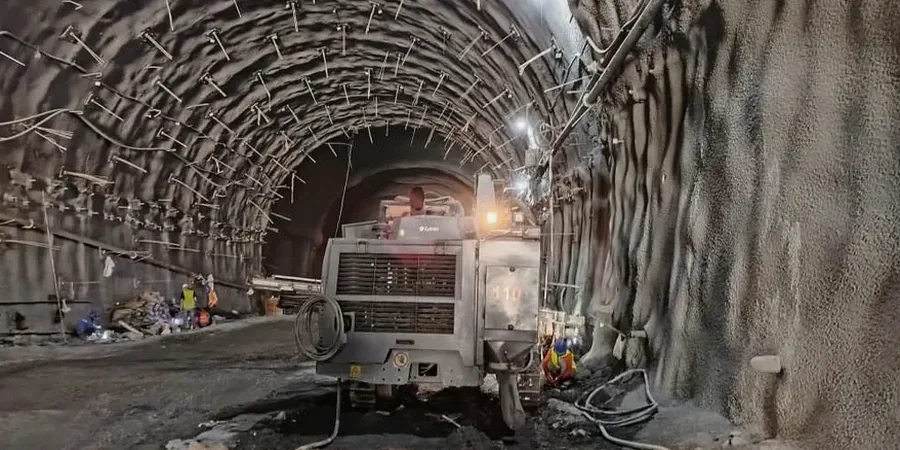
Critical ground factors in Trois-Rivieres
The most common mistake on Trois-Rivières sites is treating monitoring as a checkbox, not a decision tool. A crew installs a couple of targets, takes a reading once a week, and files the report without looking at the trend. That's how a retaining wall on Rue Notre-Dame started leaning into a residential lot last year. Nobody saw the cumulative displacement until the crack appeared in the asphalt. Real risk control means trending the data. If the rate of movement doubles between two readings, the dig stops. We establish pre-set trigger levels during the planning phase, keyed to the actual soil profile. In marine clay, that threshold is much tighter than in glacial till. The cost of ignoring this? A few thousand in instrumentation becomes a six-figure repair and a project delay measured in months.
Our services
We deliver a complete monitoring package, from instrument selection and installation to daily data interpretation. Every project in Trois-Rivières gets a site-specific instrumentation plan based on the geotechnical baseline report.
Excavation Instrumentation and Monitoring
Full suite of inclinometers, piezometers, settlement points, and tiltmeters installed per CSA A23.3 Annex N. Daily readings during active excavation, with automated alerts if movement exceeds pre-set thresholds.
Third-Party Review and Trigger Reporting
Independent review of monitoring data for contractors and owners who need an unbiased assessment. We deliver trend analysis, trigger compliance reports, and immediate recommendations if the dig approaches the design envelope.
Top questions
When does the NBCC require geotechnical excavation monitoring in Trois-Rivières?
The NBCC 2020 requires monitoring for any excavation deeper than 6 meters or any cut that could impact adjacent structures, regardless of depth. In Trois-Rivières, the city also has specific bylaws for digs within the heritage district near the old port. A monitoring plan must be sealed by a professional engineer and include trigger levels for lateral movement, settlement, and groundwater change. We submit the plan as part of the shoring permit package.
What does a typical monitoring system cost for a project in Trois-Rivières?
Instrumentation and monitoring for a standard urban excavation in Trois-Rivières typically falls between CA$1,190 and CA$3,830, depending on the number of monitoring points, depth of the cut, and duration of the project. This includes installation, daily readings during the critical dig phase, and all compliance reporting.
What instruments are needed for a site with high groundwater near the Saint-Maurice River?
Any excavation within 500 meters of the Saint-Maurice River needs a solid groundwater monitoring array. We install at least two vibrating wire piezometers at different depths to capture perched water and the regional aquifer. If dewatering is planned, we add a flow meter on the discharge line and monitor settlement points on nearby structures. The data is correlated with river stage levels from the public gauge at the Trois-Rivières station.
How fast do we get the data after a reading?
Same day. Our field crew takes readings in the morning and uploads the raw data to a secure portal by 2:00 PM. You get a summary email with the key trends and any trigger alerts. If a reading exceeds a trigger level, you get a phone call within the hour and a written recommendation before the end of the day.