The first thing that rolls onto a site in Trois-Rivières for a shallow foundation job isn't always a drill rig — often it's the dynamic cone penetrometer, a compact unit we can maneuver tight against the old stone foundations in the historic district without tearing up the landscaping. That quick profiling tells us within hours if we're dealing with the stiff clay crust near the Saint-Maurice River or the looser sands left by the old fluvial terraces. The city sits right where the river meets the St. Lawrence, which means the subsurface here is a layered mix of Champlain Sea clays and deltaic deposits, and that layering controls everything about how a footing behaves. A proper footings design here starts with reading that stratigraphy before we ever pick a bearing pressure. The NBCC 2020 and CSA A23.3 give us the framework, but the local geology writes the rules — and after working across the Mauricie region, you learn when to trust the numbers and when a little extra caution in the test pits investigation saves a project from surprises down the road.
In Trois-Rivières, the bearing capacity equation changes block by block — what works near the riverfront won't necessarily work three streets inland.
Methodology applied in Trois-Rivieres
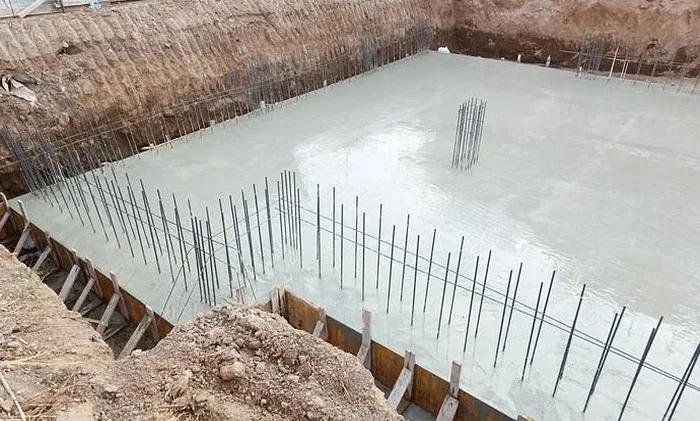
Critical ground factors in Trois-Rivieres
One thing we keep seeing in Trois-Rivières is contractors who assume the soil at the bottom of a 1.5-meter excavation looks fine and pour the footing without a proper bearing check — then six months later the homeowner calls about a crack running diagonally from the window corner. The Champlain Sea clay here has a desiccated crust that can fool you: it's stiff near the surface but softens quickly at depth, and if the footing sits right on that transition zone, differential settlement is almost guaranteed. We've also run into problems where a footing drains water from an adjacent silt lens, triggering consolidation settlement that wasn't in the original calculation. Running a CPT test profile through the bearing stratum catches these soft zones before they become a call-back. And with the seismic requirements in the NBCC — Trois-Rivières sits in a moderate seismicity zone — we always check the liquefaction potential of the loose sand layers, because a footing that survives static loads can still punch through if the sand loses strength during shaking.
Our services
Our shallow foundation design work in Trois-Rivières covers the full engineering workflow, from initial site characterization through to construction-phase verification. We don't just hand over a bearing pressure number — we produce a complete geotechnical design package that includes settlement predictions, frost protection detailing, and seismic checks where the site conditions warrant it.
Bearing capacity and settlement analysis
Full analytical design using limit equilibrium and consolidation theory, calibrated to site-specific lab data from Shelby tube samples and field vane shear tests across the Trois-Rivières area.
Footing geometry and reinforcement design
Strip, pad, and combined footing designs per CSA A23.3 with crack-width control checks, tailored to the frost depth requirements and serviceability expectations for Mauricie region structures.
Construction-phase subgrade inspection
On-site bearing verification during excavation using DCP testing and visual classification, confirming that the actual ground conditions match the design assumptions before concrete is placed.
Top questions
What does shallow foundation design typically cost for a project in Trois-Rivières?
For a standard residential or light commercial project in Trois-Rivières, the shallow foundation design package — including site investigation interpretation, bearing capacity calculations, settlement analysis, and stamped engineering drawings — generally falls between CA$2,870 and CA$4,410. The final figure depends on the number of footing types, the complexity of the soil profile, and whether additional site testing like plate load verification is required.
How deep do footings need to be in Trois-Rivières?
The NBCC requires a minimum footing embedment of 1.5 meters below finished grade for frost protection in the Trois-Rivières area. However, that's just the starting point — if the bearing stratum is deeper, or if we're dealing with fill material near the surface, the footing may need to go deeper to reach competent natural soil. We always confirm the final depth based on the borehole log and the soil's undrained shear strength profile.
Can you design shallow foundations on the clay soils near the Saint-Maurice River?
Yes, but it requires a careful approach. The Champlain Sea clay in Trois-Rivières is sensitive — it loses strength when remolded — so we avoid disturbing the bottom of the excavation before pouring. We typically specify a mud slab or a granular working mat immediately after excavation, and we base the bearing capacity on the undrained shear strength from field vane tests rather than SPT blow counts alone. Settlement is the controlling factor more often than bearing failure, so consolidation testing on undisturbed samples is standard practice.
How long does the design process take from site investigation to stamped drawings?
Once the geotechnical investigation data is in hand — which the drilling crew can collect in one to two days on site — the analysis and design phase for a typical shallow foundation project takes about 7 to 10 business days. That includes the bearing capacity and settlement calculations, footing geometry optimization, reinforcement detailing per CSA A23.3, and preparation of the stamped design package. Complex sites with variable stratigraphy may require additional time for parametric settlement studies.