One of the most expensive mistakes we see in the Trois-Rivières region involves importing granular fill that looks right in the truck but fails under compaction simply because nobody ran a proper gradation curve. The silty deposits left by the St. Maurice River can fool even experienced earthworks supervisors. A sand cone density test confirms in-place compaction, yet without the supporting grain size distribution you never know if the material itself meets the target envelope. Our laboratory combines mechanical sieving for the coarse fraction with a hydrometer analysis for fines smaller than 75 microns, delivering the complete curve that NBCC and CSA A23.3 require for structural backfill, concrete aggregate qualification, and drainage filter design. Trois-Rivières projects across the Cap-de-la-Madeleine and Trois-Rivières-Ouest sectors benefit from this dual-method approach because local tills often contain just enough silt to shift a sand from well-graded to gap-graded in a single test pit.
The difference between a well-graded sand and a gap-graded silty sand in Trois-Rivières is often 3% passing the No. 200 sieve—data you only get from a combined sieve and hydrometer analysis.
Methodology applied in Trois-Rivieres
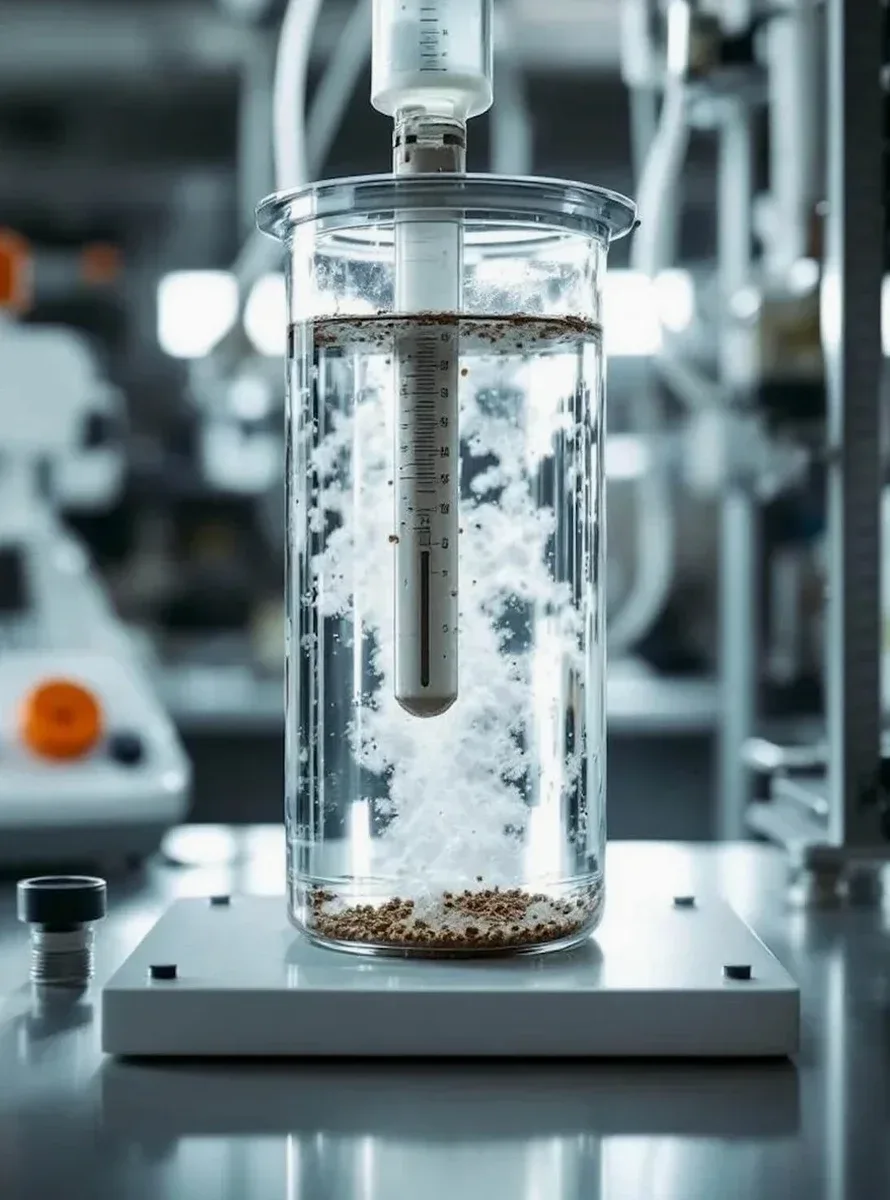
Critical ground factors in Trois-Rivieres
In Trois-Rivières, we often see structural backfill placed against foundations where the gradation curve was assumed from a quarry ticket rather than verified by a local lab. That shortcut backfires when the material contains 8% more fines than the spec allows, trapping water behind the wall during the spring thaw. The freeze-thaw cycles that hit the Mauricie region—where temperatures swing from -30°C to +30°C annually—turn that trapped moisture into ice lenses that heave retaining structures and crack basement slabs. A grain size analysis that stops at the No. 200 sieve misses the clay fraction entirely, and it is precisely that fraction that governs the soil’s drained shear strength and volume change potential. For contractors working near the Saint-Maurice floodplain, skipping the hydrometer on silty samples means underestimating the liquefaction susceptibility of thinly bedded sand-silt sequences.
Our services
Our Trois-Rivières laboratory packages the grain size analysis with complementary index and performance tests so you receive a complete material classification ready for geotechnical reporting. Each service follows the relevant ASTM method and includes a signed data sheet with the gradation curve plotted on semi-log paper.
Complete gradation package
Combined sieve analysis (coarse) and hydrometer (fine) on a single sample, reported with USCS classification, Cu/Cc coefficients, and percent gravel, sand, silt, and clay.
Filter compatibility assessment
Grain size curves for base soil and filter material compared against Terzaghi's retention criteria to verify that drainage layers will not clog or pipe fines.
Concrete aggregate qualification
Sieve analysis of fine and coarse aggregate fractions against CSA A23.3 grading limits, including fineness modulus calculation for mix design.
Top questions
What is the typical turnaround time for a combined sieve and hydrometer test in Trois-Rivières?
Standard turnaround is five to seven business days from sample receipt. The hydrometer portion requires a 24-hour sedimentation period plus temperature-controlled readings at precise intervals, so rushing this step compromises the accuracy of the clay fraction. Expedited three-day service is available for an additional rush fee.
How much does a grain size analysis with hydrometer cost?
A combined sieve and hydrometer analysis typically ranges from CA$140 to CA$260 per sample, depending on whether the material is predominantly granular or fine-grained and whether we need to run a pre-wash to remove organic matter. Bulk pricing applies for projects submitting ten or more samples.
Do you need both sieve and hydrometer for every sample?
Not always. If visual inspection and the wash over the No. 200 sieve show less than 5% fines, the hydrometer is usually unnecessary. But in Trois-Rivières, where Champlain Sea silts are pervasive, many samples that look clean in the field end up with 12-15% passing the 75 µm sieve—enough to require the hydrometer for accurate classification.
Can I drop off samples directly at the Trois-Rivières lab?
Yes, sample drop-off is available during business hours. We recommend using sealed plastic bags inside rigid containers to prevent moisture loss or contamination during transport. For disturbed samples, a minimum of 500 grams is needed for sieve-only analysis, and at least 200 grams of the minus No. 10 fraction for the hydrometer portion.