A seven-story mixed-use development proposed for the Cap-de-la-Madeleine sector triggered a fundamental question from the structural review board: how would the deep Champlain Sea clay deposits amplify ground motion during a design-level earthquake? The building code's default site class wasn't going to cut it. In Trois-Rivières, where surficial geology shifts from stiff glacial till near the river terraces to thick compressible clays just a few blocks inland, a site-specific seismic microzonation transforms a generic hazard number into a spatially accurate picture of shaking intensity. Our technical team runs the full sequence—MASW, downhole seismic, and ambient vibration arrays—to build a shear-wave velocity model that feeds directly into NBCC 2020 site classification. When you're investing in a city that sits less than 150 km from the Charlevoix Seismic Zone, the return on that geophysical campaign shows up in foundation costs, insurance underwriting, and peace of mind for the structural engineer. We also cross-check results with CPT test data where soft soils require careful liquefaction screening.
In Trois-Rivières, a one-letter change in NBCC site class—from C to D—can alter design spectral acceleration by over 40 percent, directly impacting foundation concrete and steel quantities.
Methodology applied in Trois-Rivieres
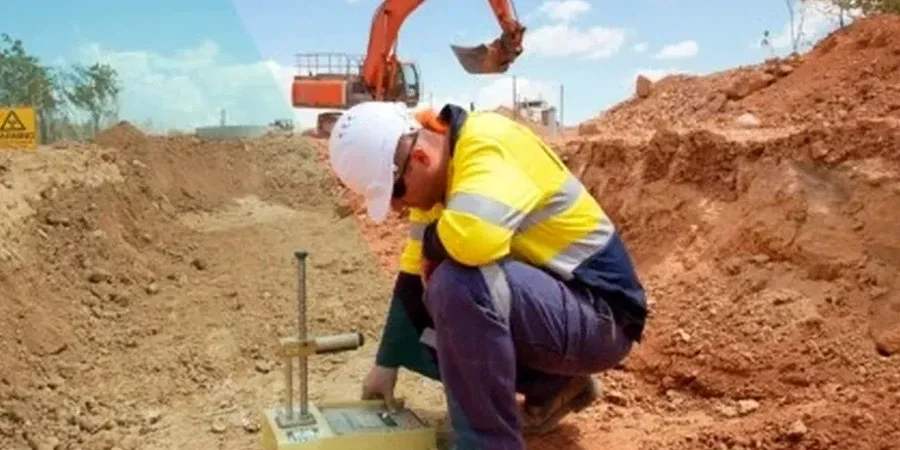
Critical ground factors in Trois-Rivieres
NBCC 2020 Article 4.1.8.4 requires site classification based on Vs30 unless a detailed site-specific response analysis is performed. In Trois-Rivières, defaulting to a conservative site class without verification is a gamble that can backfire expensively. The city's post-glacial stratigraphy includes thick sequences of sensitive clay that exhibit cyclic softening potential—a behavior well-documented in the St. Lawrence lowlands and studied extensively since the seminal work on Champlain Sea deposits. A project that proceeds with an assumed Site Class E may trigger deep foundation requirements where a Class C designation would have sufficed, adding hundreds of thousands of dollars to the piling contract. Worse, a site mistakenly classified as stiffer than reality could produce an unconservative design, leaving the structure vulnerable during a moderate event originating in the Charlevoix region. Microzonation closes this gap by replacing regional interpolation with measured data, allowing the geotechnical engineer to justify the site coefficient to the authority having jurisdiction with defensible, repeatable geophysical records.
Our services
Our seismic microzonation program in Trois-Rivières is structured to take a project from preliminary hazard screening all the way to the ground-motion time histories that structural engineers require for nonlinear analysis. Each phase is calibrated for the site conditions typical of the Mauricie region.
Vs30 Site Classification & 2D Shear-Wave Profiling
Field acquisition using active MASW and passive array techniques to map subsurface velocity structure, determine NBCC site class, and identify zones of impedance contrast that influence ground motion amplification across the building footprint.
Site-Specific Response Analysis & Liquefaction Screening
One-dimensional equivalent-linear or nonlinear ground response analysis using DEEPSOIL or equivalent software, incorporating local input motions scaled to the NBCC uniform hazard spectrum, with explicit evaluation of cyclic stress ratio for interbedded sand layers.
Top questions
What is the typical cost range for a seismic microzonation study on a 1-hectare commercial site in Trois-Rivières?
For a site of that scale, with active MASW arrays and passive HVSR stations plus subsequent response analysis, the total investment generally falls between CA$6.340 and CA$21.510 depending on the number of measurement points, depth to bedrock, and whether time histories are required for the structural model.
How does microzonation differ from the seismic hazard maps included in the building code?
NBCC seismic hazard maps deliver the reference rock motion at the national scale—essentially what a very stiff site would track record. Microzonation takes that reference motion and modifies it for the actual soil column beneath your property, accounting for amplification, resonance, and basin-edge effects that can vary significantly across a single parcel in the St. Lawrence valley.
What geophysical methods are used, and how deep do they investigate?
We combine active MASW (multi-channel analysis of surface waves) for high-resolution Vs profiles to 30-40 meters and passive array techniques using ambient vibrations to reach depths beyond 150 meters. This combination captures both the shallow soils that control site class and deeper velocity contrasts needed for response analysis.
Can the microzonation results help reduce foundation costs?
Yes—this is often the primary economic driver. When measured Vs30 values demonstrate a stiffer site class than the conservative default, the design spectral acceleration can be reduced, potentially lowering seismic base shear demands and allowing more economical foundation and lateral system designs that still fully comply with NBCC requirements.